UX Research - Rollr
Seeking to solve the safety needs of marginalized tabletop gamers
Project Summary
Market research to identify viability, fit, and personas for Rollr, an app designed to help marginalized tabletop gamers find other players like them.
Timeline
1 week product pitch/ideation
2 weeks survey distribution and findings synthesis
My Responsibilities
Product strategy/pitch
Research planning
Synthesizing findings
Interesting Facts
Survey respondents are global; I received several offers to help translate the app into other languages when it’s built.
Starting with a little discovery—and a micro-survey
I’ve been active in the tabletop roleplaying game (TTRPG) community for many years. As a streamer and TTRPG content creator, I’ve built a community of around 100 gamers from diverse backgrounds.
The hobby is a social one, and we gamers talk about it a lot. I started realizing one struggle stood out among the rest: finding a group you feel comfortable with is HARD.
I’m a UX designer; I could solve for this.
Knowing scheduling was an obvious problem, I did a quick Twitter poll to confirm and start conversations- but also to see if there were other problems keeping people from getting a gaming group.
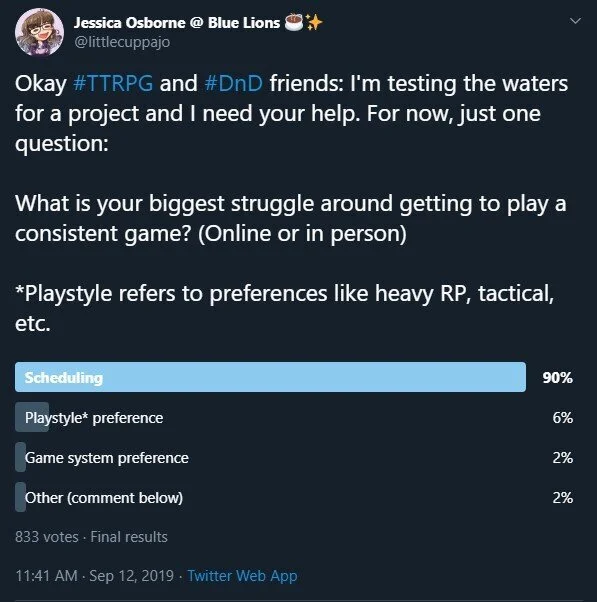
View the original tweet thread and replies
Building a survey to capture target market data with sensitivity and empathy
Clearly marginalized players had an even bigger struggle beyond scheduling. But I needed more data. I built a survey to gather demographics from players, and to dig a little deeper into other facets of player behavior.
Building the survey took approximately a week: I heavily researched how to build the questions to ensure they would not do harm to the marginalized players I sought to serve.
I surveyed 183 players around the world to learn about who they really were; their demographics, and their gaming habits, fears, and needs when finding a group.
The data made it clear there is an audience for the app.
So where DO players go to play online?
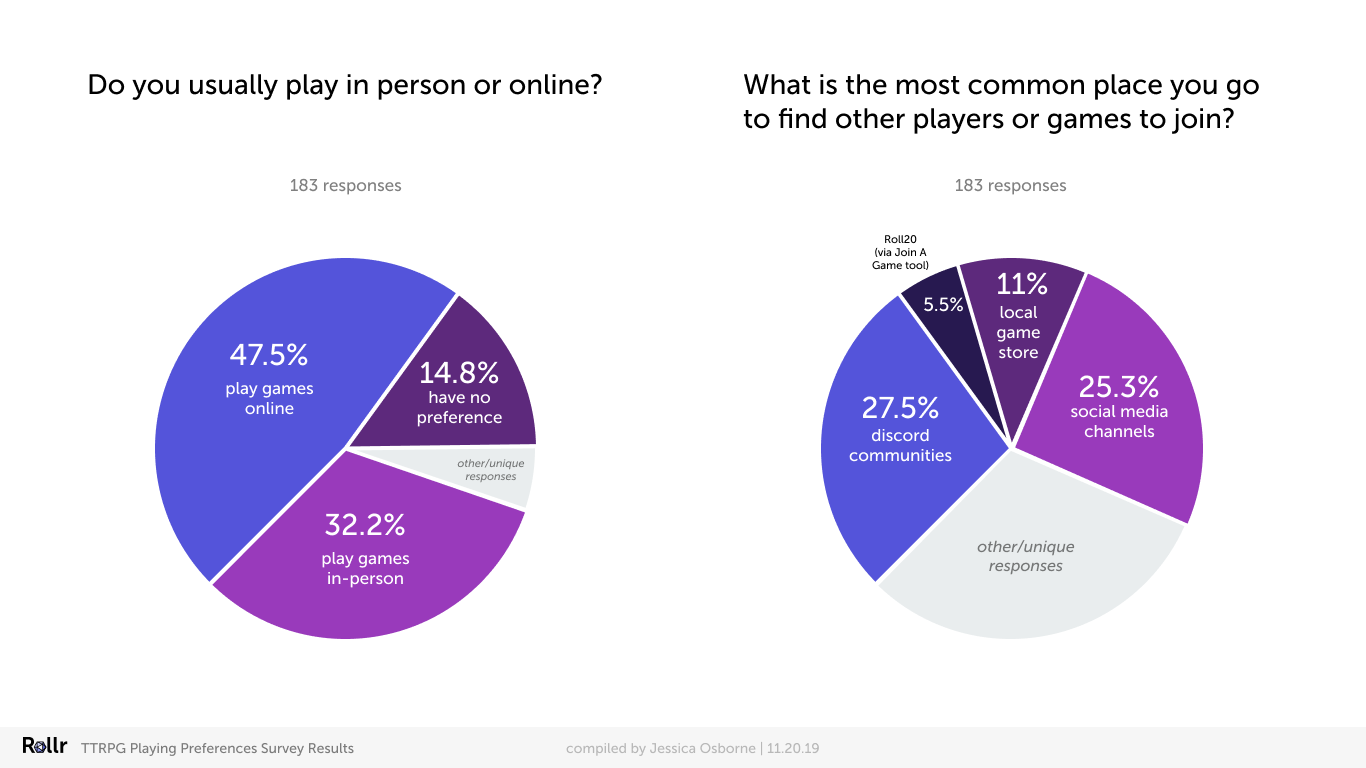
Survey responses showed a sizable number of TTRPG players conduct their games online-- they also tend to find each other there.
Only 11% of gamers go to a brick-and-mortar game store to find new players. All other modes are via online channels like social media, Roll20, and Discord.
A note about the data: Given this survey was conducted online, the results skewing toward online platforms is not surprising. One of my future goals is to promote and conduct another round of the survey at PAX Unplugged, a tabletop gaming convention with an attendance of over 45,000 gamers.
An overwhelming shift in tradition player identities
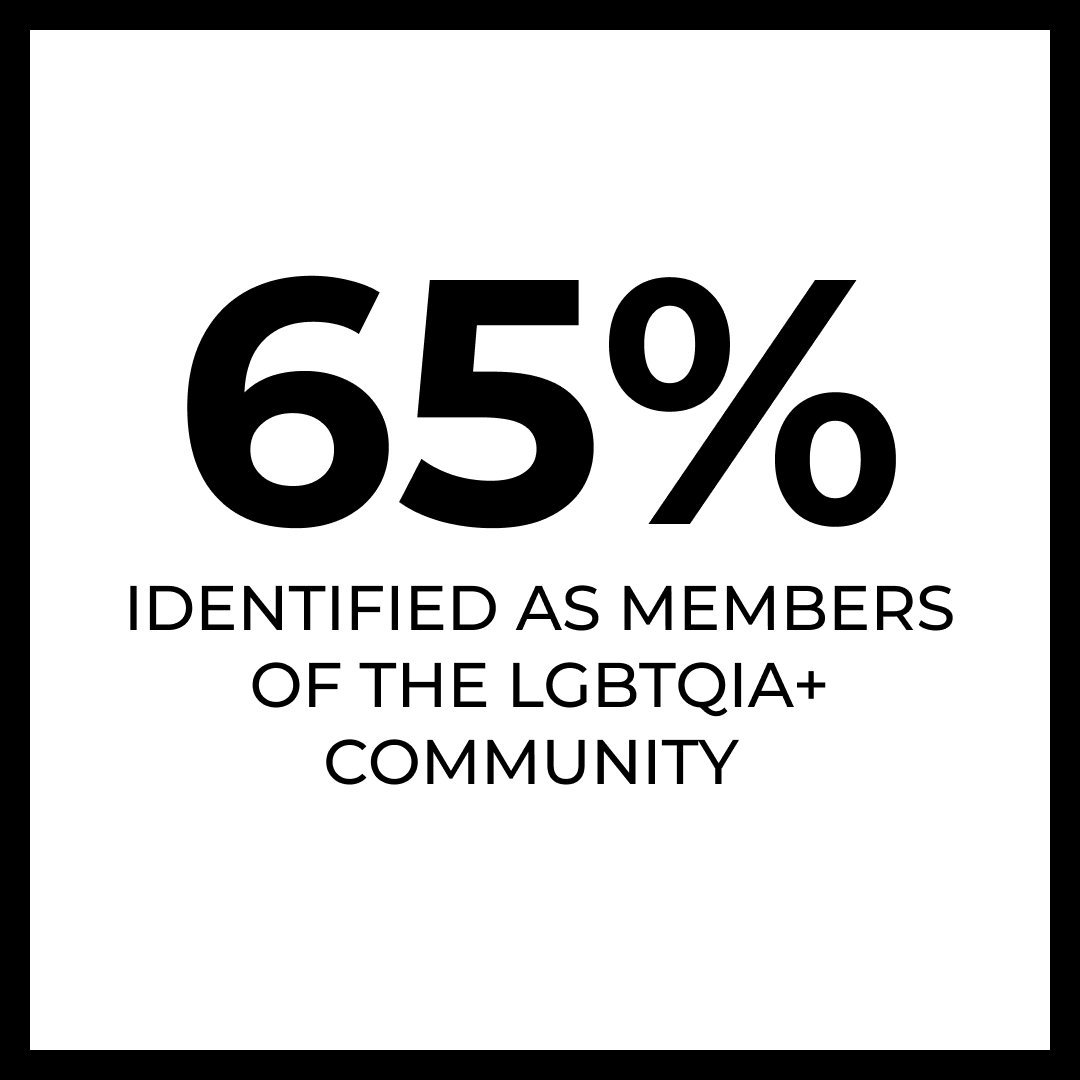
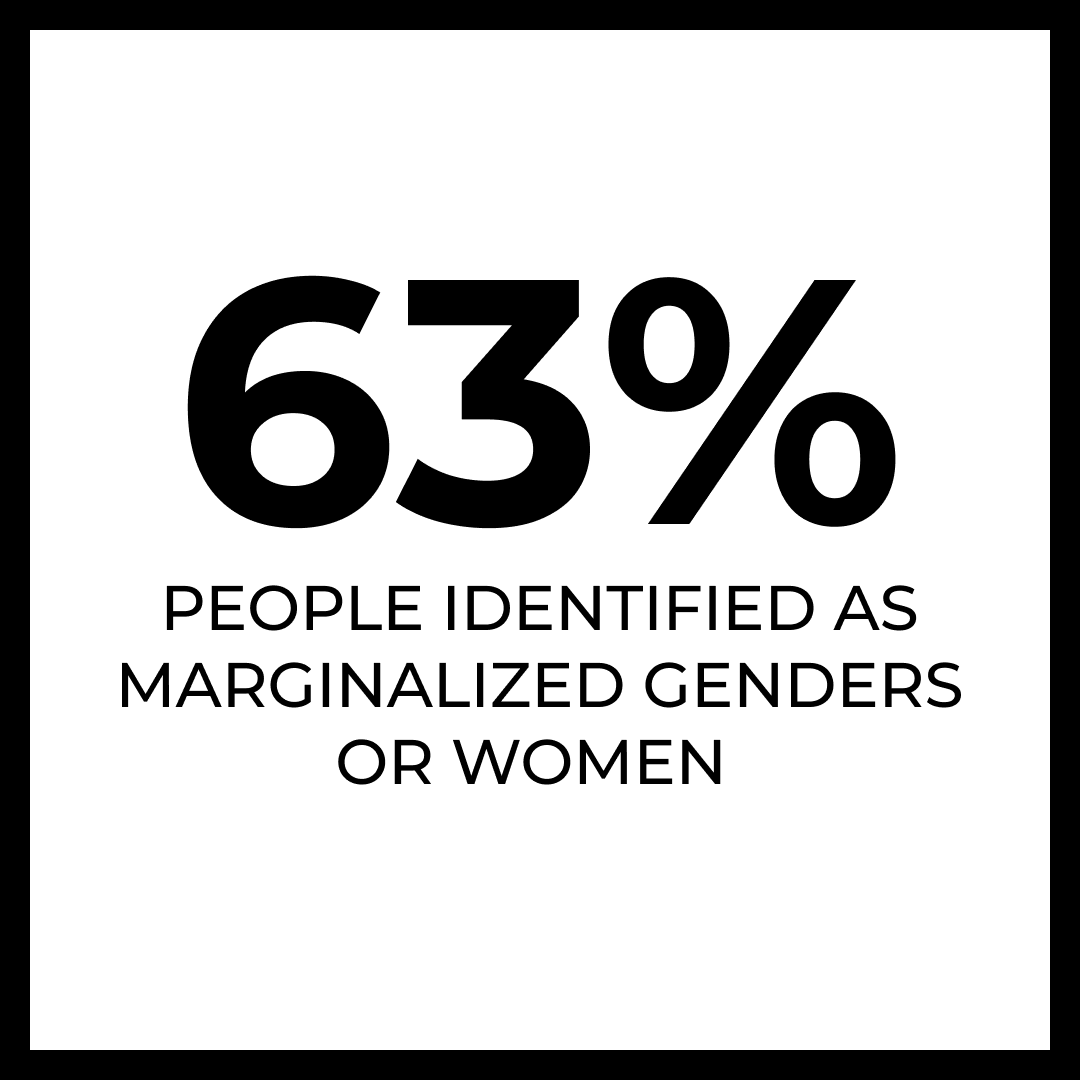
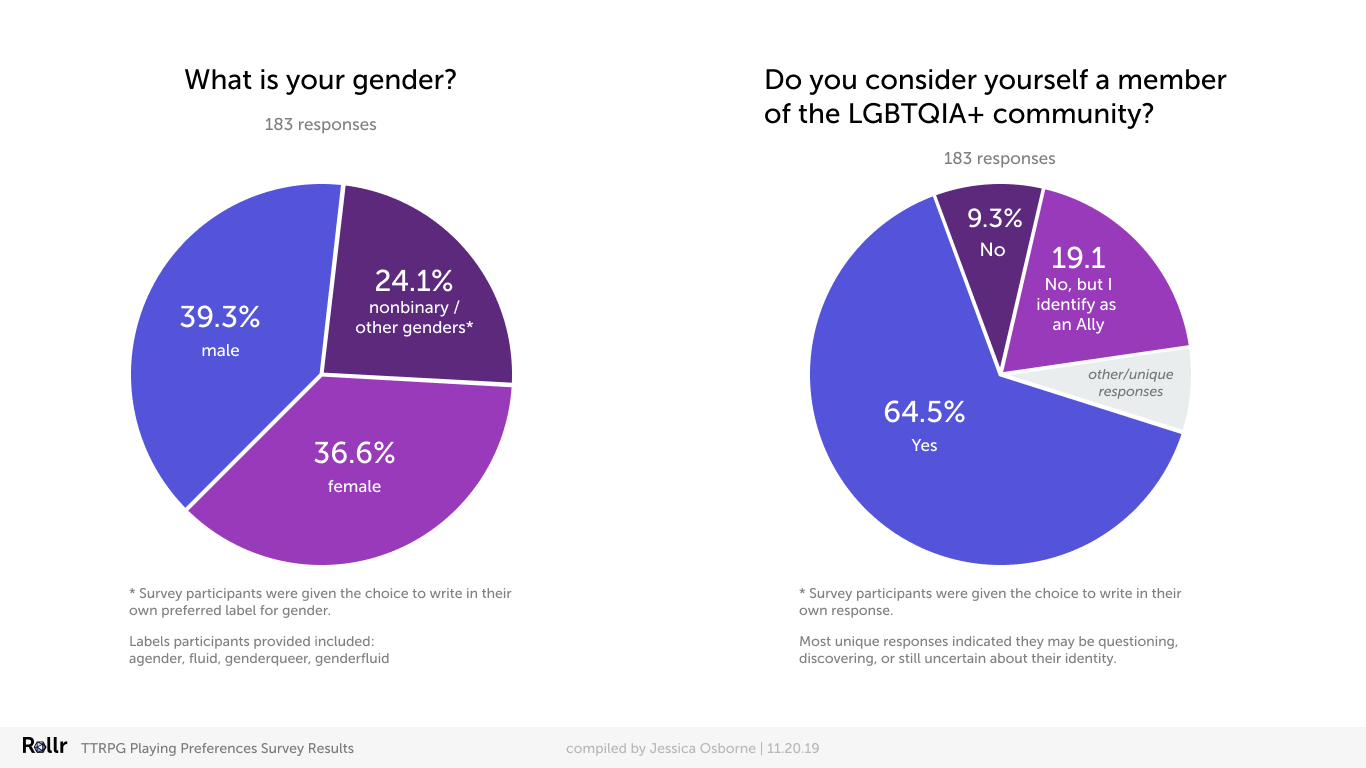
An overwhelming majority of TTRPG players identify as women or nonbinary/other genders and queer. The hobby is anecdotally known to have been white cis/het male dominant for years, making this a noteworthy reversal. If there was ever a metric to indicate a need for a product like Rollr, this would be it.
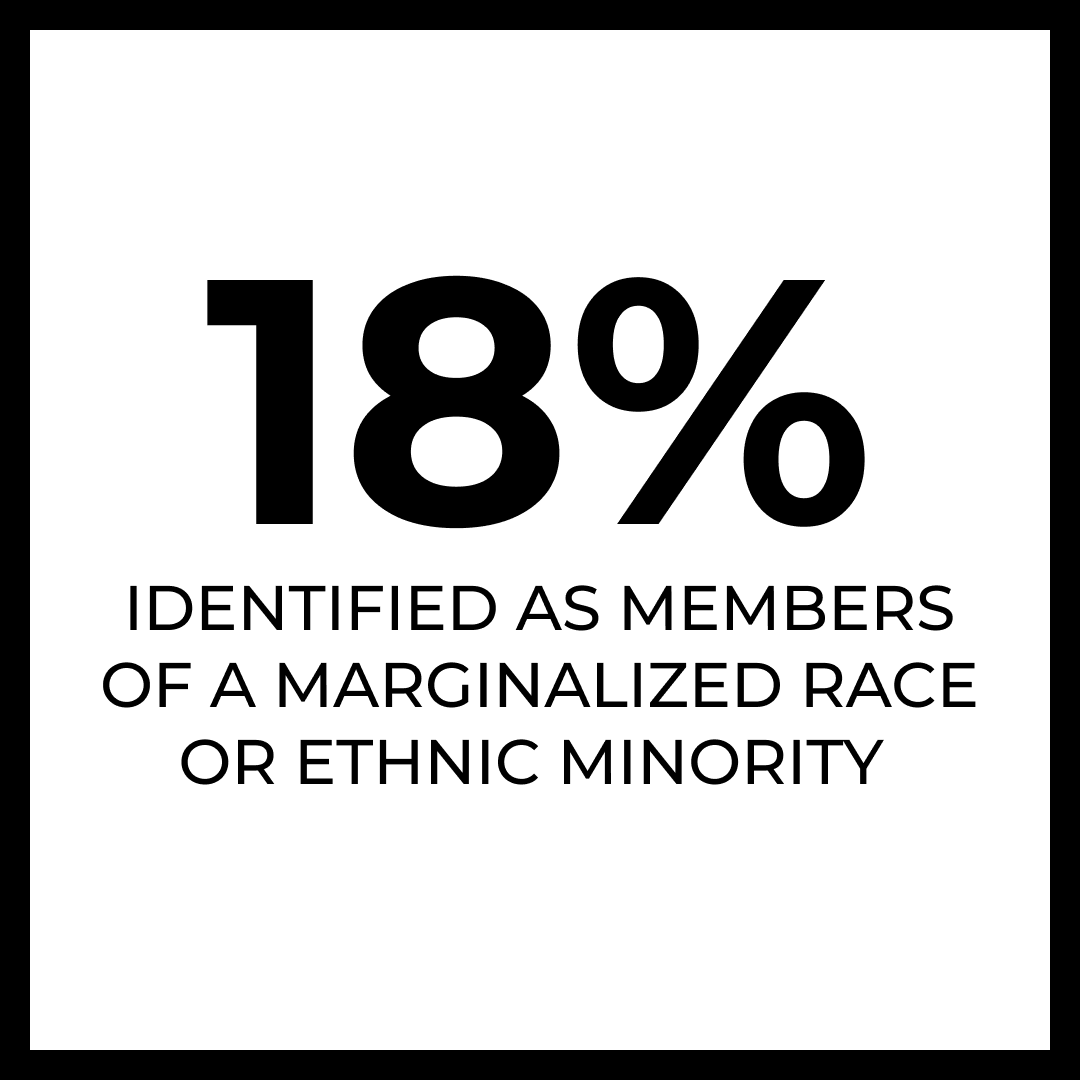
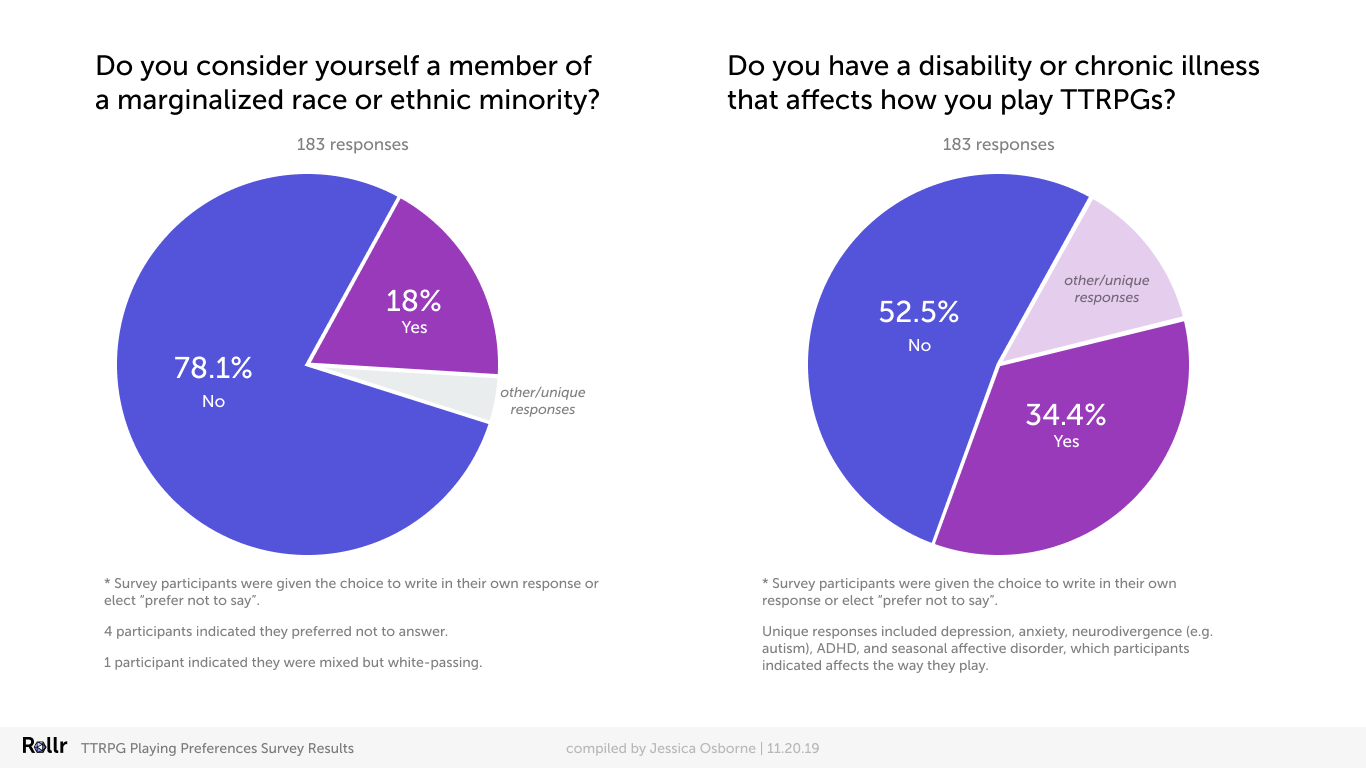
Marginalized races and ethnicities: POC players remain a minority group within the TTRPG circles. There is a possibility the sample size didn’t find its way to enough POC circles. POC player scarcity and the likelihood they would like a table of other POC indicates a possible use for an app like Rollr to help accelerate finding people who identify with a specific segment.
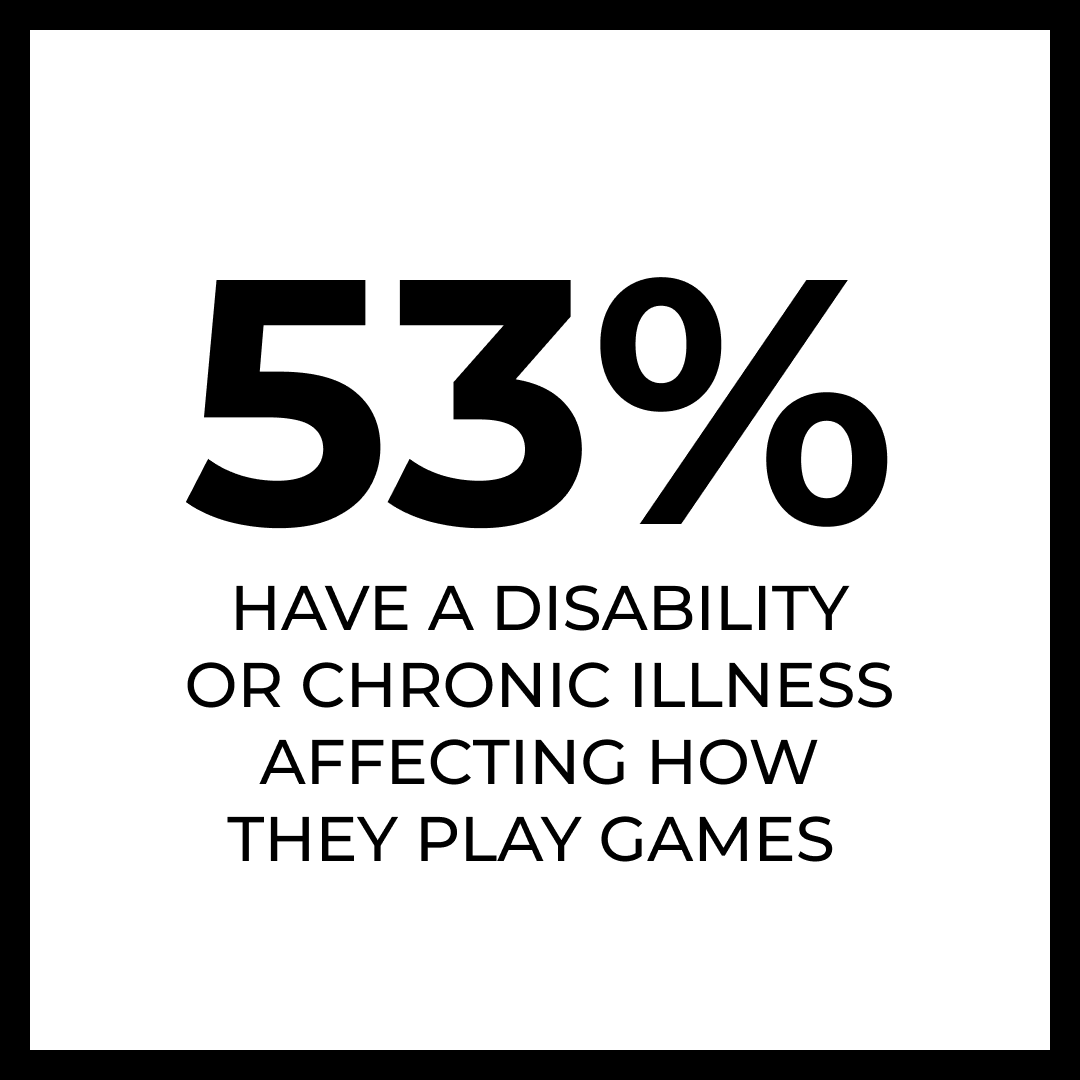
Accessibility needs: The question was intentionally very general this early in, but responses revealed a large number of players struggle with mental illness, neuro-divergence, and other less visible factors that impact their experience at a table.
Building personas with intersectional identities
I created personas by combining some of the identities and player needs indicated in the survey results to help better represent the myriad ways these identities and needs can intersect. (e.g. Bailey, who is an NB artist on active on Twitter that wants to find a queer-friendly group so they can be creative and comfortable.)
While the most basic need (find players of similar ilk) is the same for everyone, there are additional factors that will create a variance in the information a player will find most useful or not. (e.g. Aaron streams his games, and casting is one of the most time-consuming aspects of the process with no tools to help. He needs highly performance-oriented players who are OK with and have a technical setup for streaming.)
This is only the beginning
My work on this project is nowhere near done. In my survey I gave people the option to volunteer their information if they would like to help me in the future on the app. I received a number of people enthusiastically voicing their support and their skills as developers, testers, and sensitivity consultants.
My next steps are to continue to break down this data and move into ideation around what to build.